Potteries

Milwaukee Stone Ware Factory

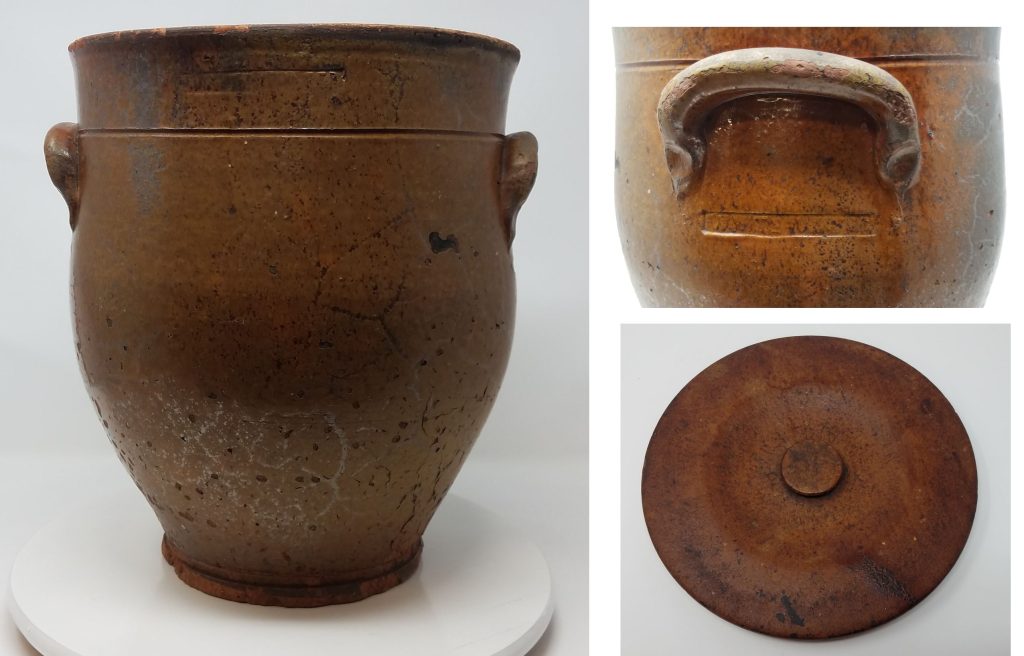
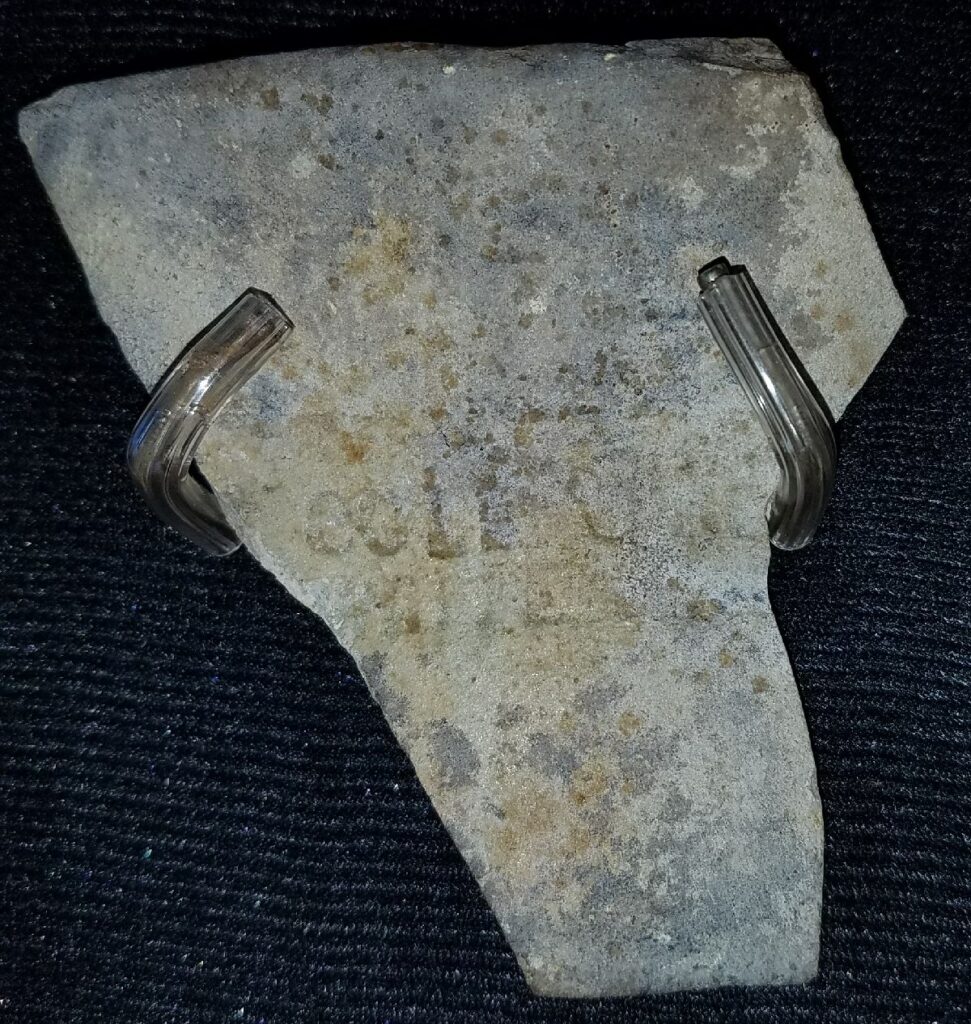
The Milwaukee Stone Ware Factory was started in late 1848 and operated for ten years. Ownership changed frequently during the first five years until the Maxfield brothers bought it in 1853. Most of the owners were merchants with retail and wholesale...

Read the article: Milwaukee Stone Ware Factory

Related articles on this site:


Milwaukee Stone Ware Factory 1849 to 1851

No pieces have been found with stamps identifying them as MSWF pieces until 1851, when Baker took ownership and began stamping larger pieces. We attribute the stoneware below as probably MSWF based on decorations, provenance, and similarity of decorations.

O.F. Baker 1851 to 1853

Baker was the first to stamp his ware, at least his decorated pieces.

Milwaukee Stone Ware Factory Read More »

Whitewater earthenware grouping

Whitewater Potteries

These articles cover the history of the four earthenware pottery manufacturers that operated in Whitewater Wisconsin. These articles will open in a new window in your browser. Scroll down to see photos.

Whitewater - Fremont Street Pottery (1846 to 1858)
Whitewater - Cravath Street Pottery (1847 to 1852)
Whitewater - Depot Pottery (1854 to 1882)
Whitewater - Whiton Street Pottery (1859 to 1866)
Whitewater - George G. Williams (Owner of Fremont Street Pottery)

Articles will open in a new tab in your browser.

Whitewater Pottery Examples

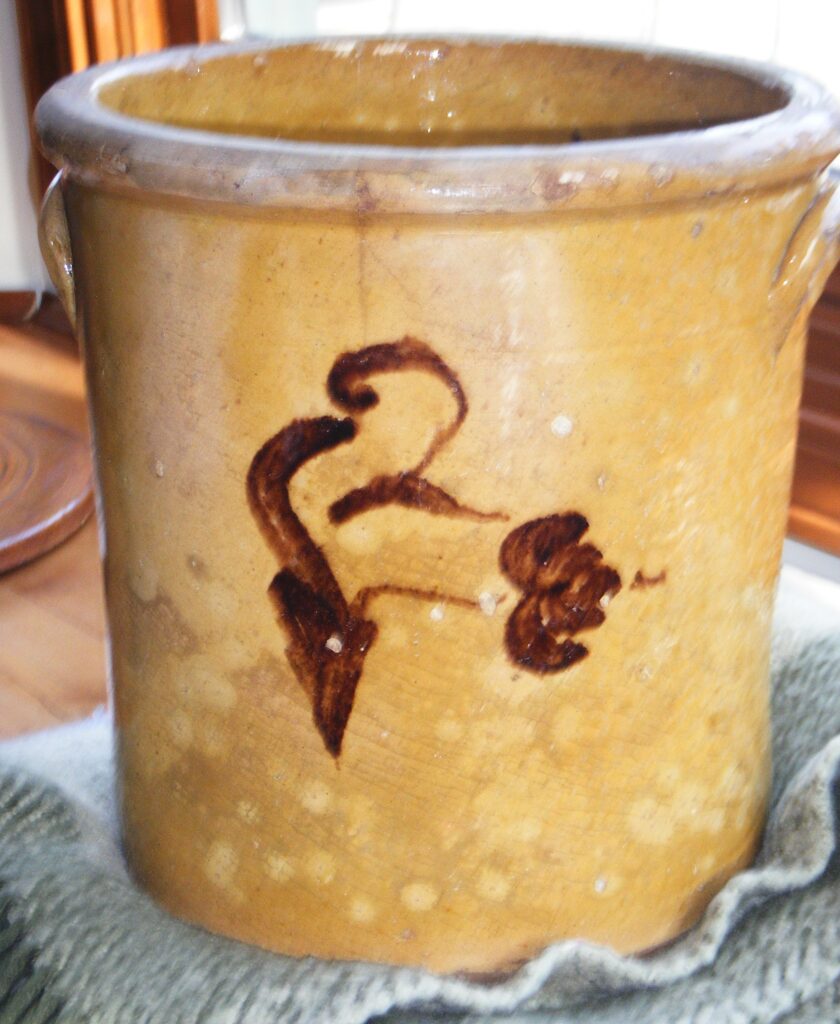
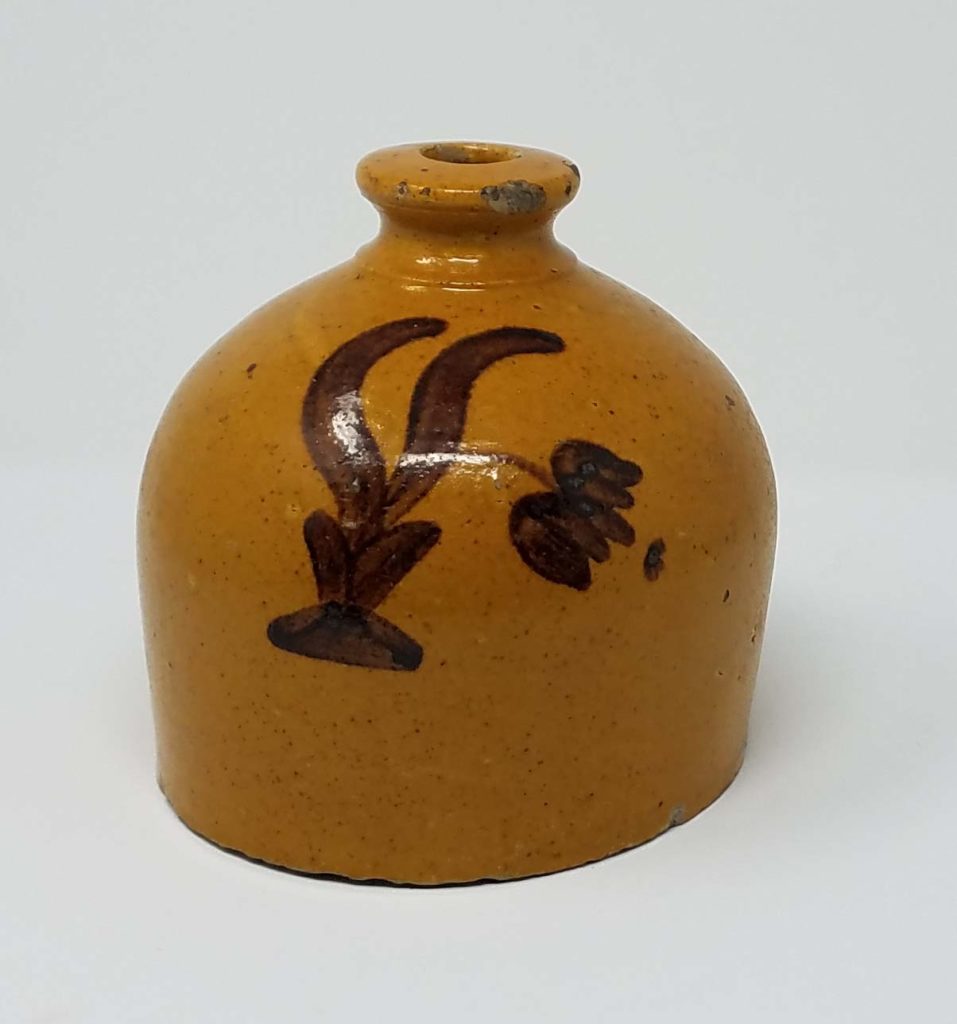
In spite of the fact that Whitewater was the larger pottery producing center in the state, relatively few examples of their ware survived, especially undamaged pieces. Whitewater pottery is extremely porous and brittle, so it easily cracks, breaks, chips, and the glaze tends to peel when it gets wet and freezes. This gallery contains photos of some of the pieces that survived.

Only a couple of surviving pieces have stamps but Whitewater pottery is often identifiable based on the glaze, decoration and light weight. We have attributed some pieces to specific potteries based on similarities to shards recovered from Whitewater pottery sites, but most cannot yet be identified. Attribution of unstamped earthenware can never be 100% and there are many pieces of earthenware with similarities with Whitewater but uncertain at best. The photos below should help.


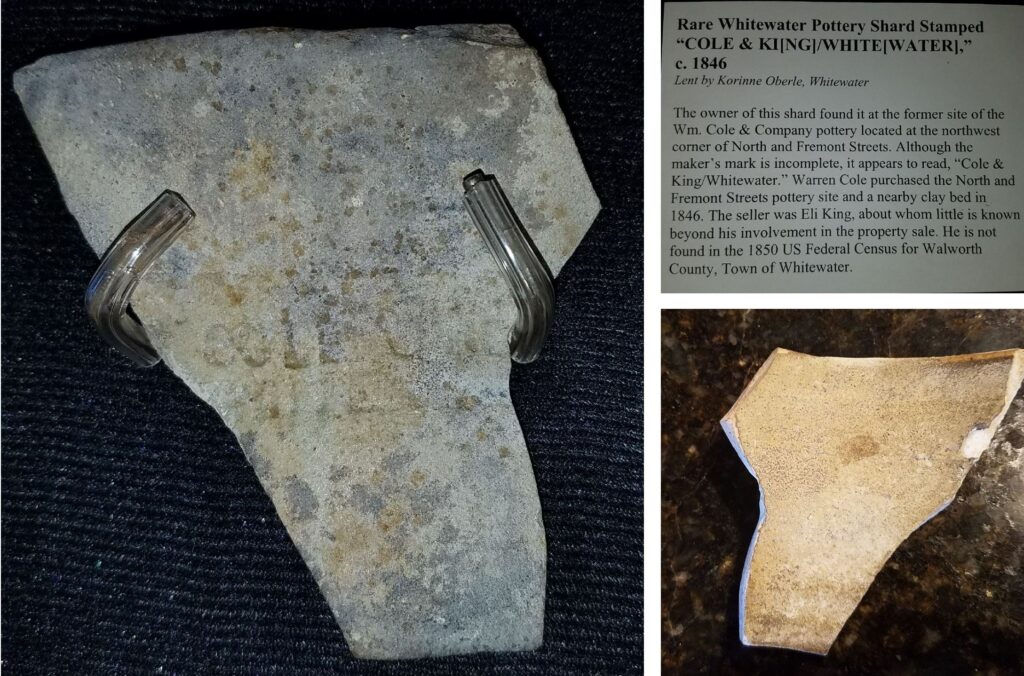
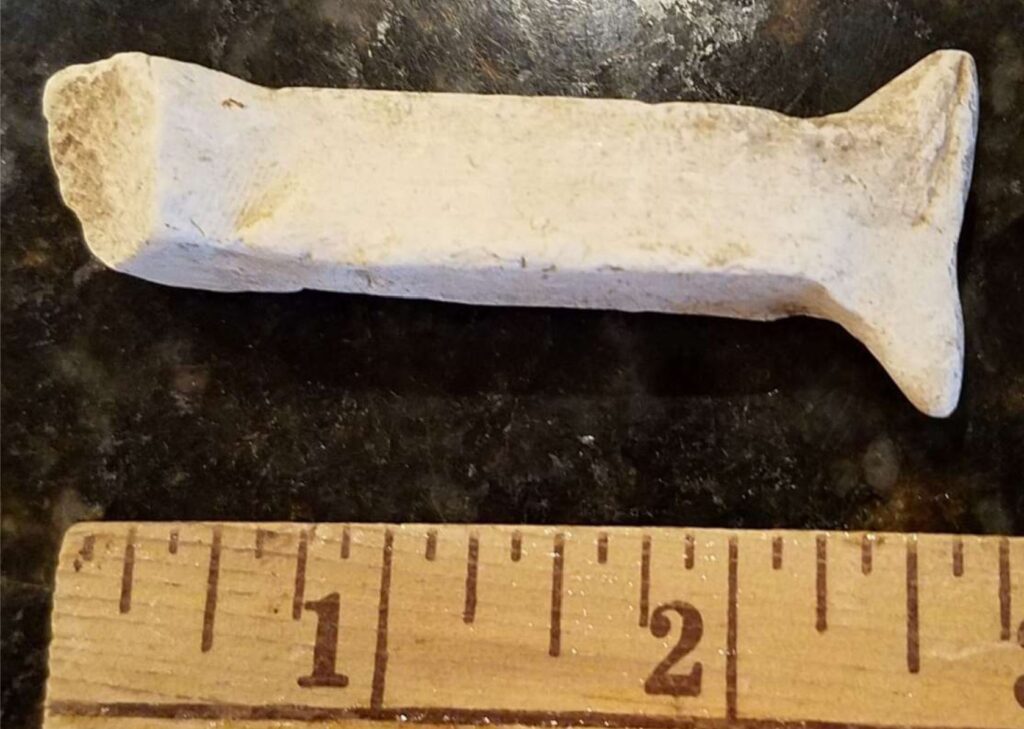
Sherds from the Fremont Street Pottery site

The photos of the few sherds from this site were found by Kori Oberle many years ago.


Sherds from the Depot Pottery site

These fragments were found during sidewalk replacement within the top foot or so of the surface. They are intended to help understand the forms, glazes and decorations used at this site.


Shards from the Whiton Street Pottery site

The waster dump for the Milz & Ohnhaus pottery was directly behind the house lived in by John Milz. Years after the pottery closed, another owner of the house built an addition over the dump with a crawl space below. Some shards were removed to create space to access to heating and plumbing lines but much of the dump still remains.

The authors were given access to study the contents of the dump. The photos below are some of the more interesting fragments found by the authors at the site.

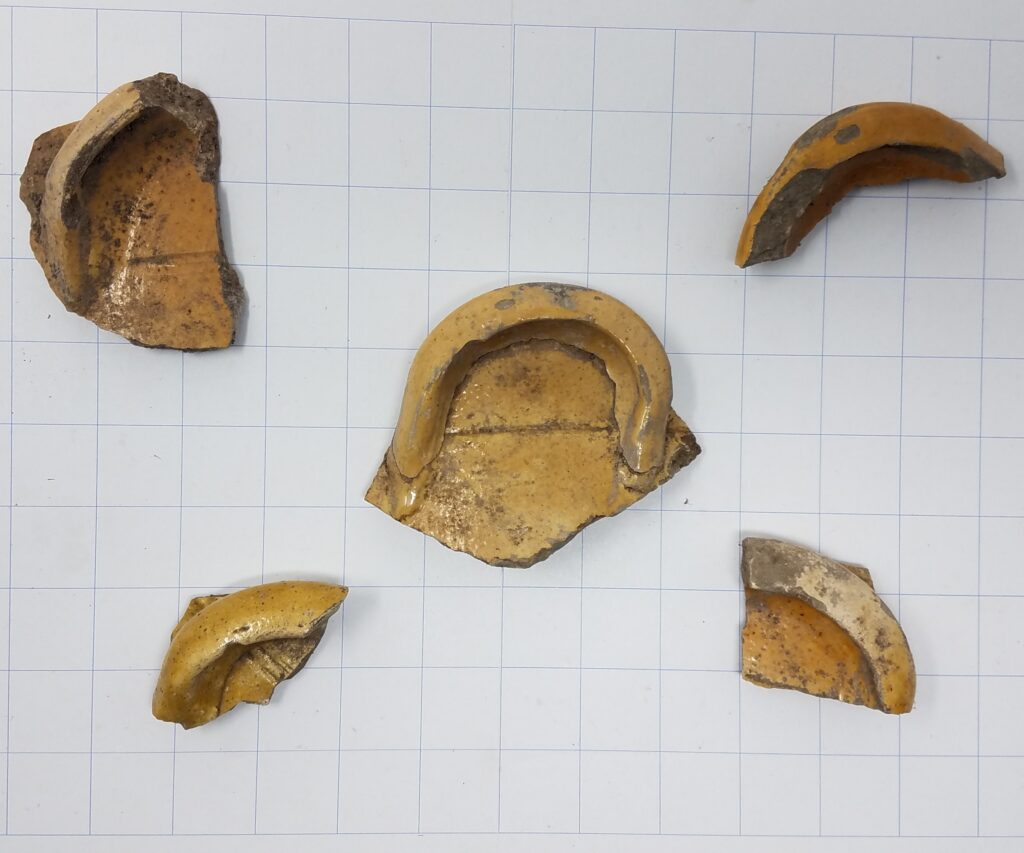
Interesting findings from the Whiton Street shards.

The ear handles are distinctly different from other Whitewater handles so this could be a way to identify Whiton Street Pottery, at least pieces with ear handles. The underside of the handles has a deeper grove than ear handles from other Whitewater Potteries.

The predominant color of the clay used is red (perhaps 60%), with the remainder a more typical light color seen on most Whitewater pottery.

Glaze colors varied widely – more so than pottery from the Depot or Fremont potteries. There were some of the typical clear and glossy yellows but from the photos you will also see darker colors like deep brown, olive green, and even some with spots typical of Galena earthenware.


Whitewater Potteries Read More »

Wisconsin Pottery Sites – Interactive Map

We have pinned 99 of the 107 Wisconsin Pottery sites known to us.  Zoom-in the see the location, and click or tap the pin to see information about the pottery that operated there. In some cases we know only the approximate location. For those we made a best-guess where it was or simply pinned a spot in the center of the city, and noted it in the pin label. The map is being updated as new sites are identified.

The map will open in a new tab in your browser.

Wisconsin Pottery Sites – Interactive Map Read More »

Menasha – The Traveling Pottery 1854 – 1855

Menasha - The Traveling Pottery

There is very limited information about this most improbable pottery-making venture. The proprietor was a Mr. Crough from Menasha. He built a pottery business on a boat that could travel from town to town, stopping to demonstrate pottery making and to sell his wares. If that alone was not enough to

https://madefromclay.org/category/people/

Menasha – The Traveling Pottery 1854 – 1855 Read More »

Shullsburg – Dielman Pottery 1856 – ??

Not much is known about this pottery. It’s exact location is unknown and no pottery or sherds has have been found that can be attributed to it. What little we do know comes from an advertisement that ran in 1856 in the Lafayette County Herald that ran beginning in March, 1856 at least through December. It offers earthenware Jugs, Crocks, Jars, Churns, Pitchers, etc.  The ad says that his wares are available at wholesale and retail prices lower than have been offered in this part of the county. The Pottery was in the Western part of the village.

When Peter Dielman started his pottery business the nearest competitor that we know of was in Twin Grove which is 35 miles to the east of Shullsburg. The Belmont pottery started in December of 1856 twenty miles to the north and the pottery at Mineral Point started in 1858 twenty-six miles away.

We don’t know how long Dielman’s pottery operated. He is not listed in the 1860 Census. He does appear in the 1870 Census for Walworth County, Whitewater (page 109) with a spelling of “Dillman”, working as a potter, presumably at the Depot Pottery. It lists him as being a Prussian native who last lived in Ohio in 1855 where a son named Sam was born to him. Before that he had been living in Pennsylvania where his oldest son John was born.

Earthenware of the southwestern part of the State tend to vary in color but presumably would be similar to the wares of other earthenware potters of the region. Until sherds are discovered it will be difficult to attribute pieces to the pottery.

Shullsburg – Dielman Pottery 1856 – ?? Read More »

Portage – Conant Street Pottery 1861 – 1863

In June 1860 Isaac Farrar left the Farrar & Russell partnership and nine months later was in full production at a new pottery he had started just a few blocks away on Conant Street that he called “I.N. Farrar & Co”. Their products were very similar to those made at the De Witt Street pottery. The “& Co” was probably Isaac’s father Moses. The pottery closed between June 1863 and February 1864 after two years of operation.

This article is an updated version of an article published in the French language magazine Ceramics in 2019.

Article:  Portage - Dewitt Street Pottery

Related Articles on this Site:

Articles will open in a new tab in your browser.

Portage – Conant Street Pottery 1861 – 1863 Read More »

Scroll to Top